
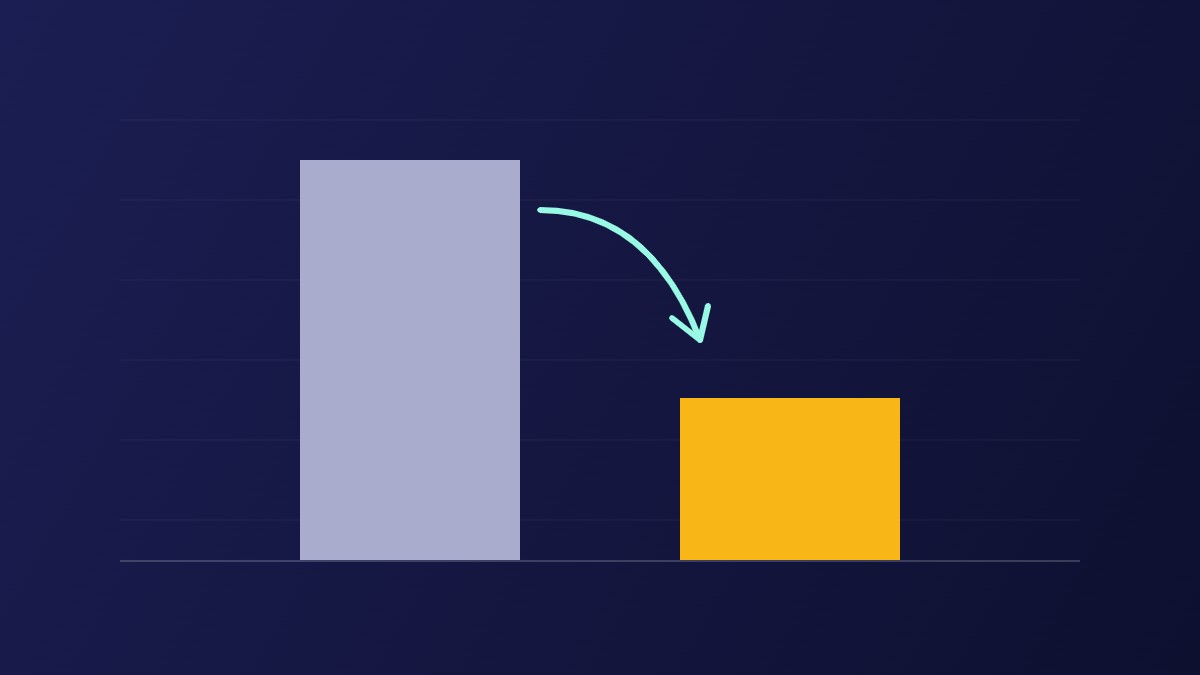
I pay 11.5% p.a. on my margin loan. Last weekend I finally did the math.
$20,000 of margin debt at 11.5% p.a. costs about $2,300 a year. The position has to earn that before I make a single dollar.
So I went looking for a cheaper way to carry the same exposure.
Idea 1: leveraged ETFs
Sell the shares, buy a 2x product with half the capital, repay the margin loan with the rest.
Two problems. The daily reset eats return whenever the stock moves sideways. And my broker rejects US ETFs for EU residents anyway. Dead end.
Idea 2: deep in-the-money calls
Deep in-the-money calls instead of shares. I priced it with real Amazon quotes: 6.7% to 12% p.a. depending on the strike, plus a wide bid/ask spread. Mostly better than 11.5%, but not by much.
Idea 3: the box spread
An idea I had read about but never priced: the box spread. Four options on the S&P 500 index (SPX), same expiry, one order:
- Sell call 7600
- Buy call 7800
- Sell put 7800
- Buy put 7600
The four legs cancel each other out. The position has no market exposure. At expiry it settles at exactly 200 points × 100 = $20,000, wherever the index stands.
I receive a credit today and repay $20,000 at expiry. The difference is the interest.
The options market as a lender
In effect, the options market lends me money. The rate follows Treasury yields for the same term:
- 3-month Treasury: 4.17% p.a.
- 1-year Treasury: 4.44% p.a.
- 1-year box (quote): 5.1% p.a.
The box is adjustable. The distance between the two strikes sets the loan amount, the expiry sets the term.
An LLM will work out the strikes for your margin balance and holding period in a minute. Check its numbers against your broker’s order preview before you send.
What I learned along the way
- Use SPX, not SPY. SPX options are European-style and cash-settled, so there is no early assignment.
- Enter all four legs as one limit order. Never leg in.
- The account needs spread approval and enough buying power.
- The loan is still secured by the portfolio. A margin call remains possible.
- At expiry the full amount is debited. Roll or repay.
The limit price is your interest rate
On my 2-month box, every 0.05 given up on the credit added 0.13 points p.a. A market order usually fills at the natural price, which on my box would have meant 7.8% p.a. instead of 4.5%.
So I would start at or above the mid price and work down step by step until it fills.
My actual trade, expiry 18 Dec 2026, 7600/7800:
- 198.50 = 3.88% p.a. Below Treasury rates, so a fill was unlikely.
- 198.35 = 4.28% p.a. No fill.
- 198.30 = 4.41% p.a. No fill.
- 198.25 = 4.54% p.a. Filled.
After fees: 4.67% p.a.
The comparison on $20,000
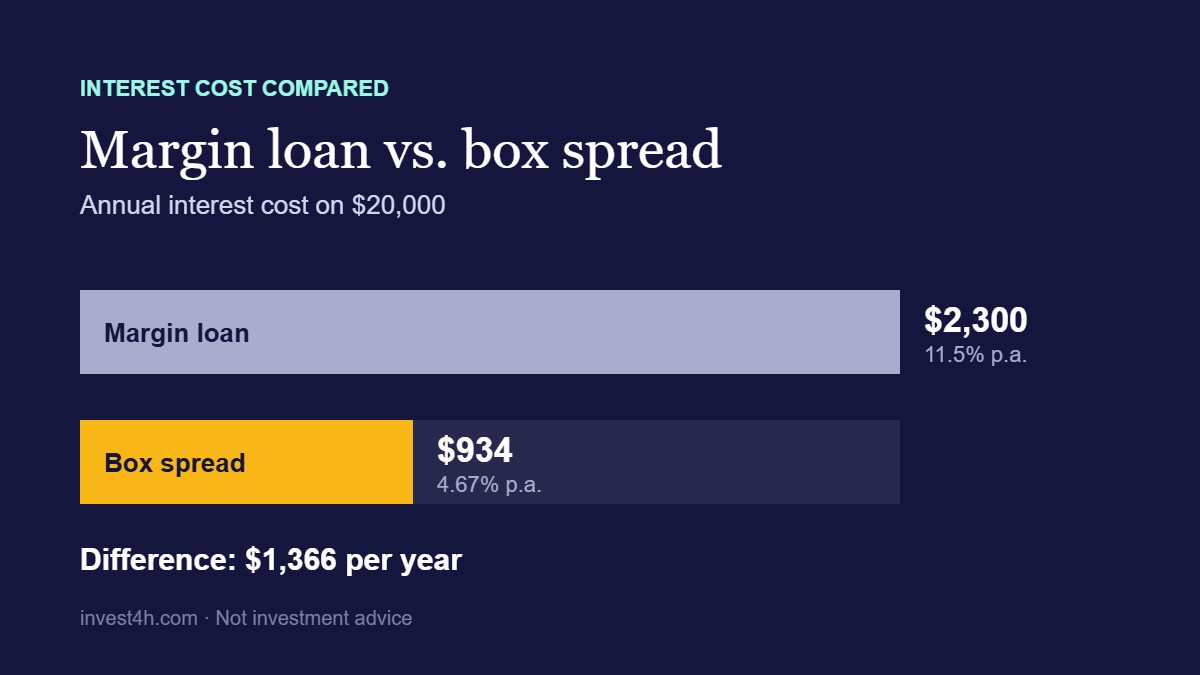
- Margin loan at 11.5% p.a.: $2,300 a year
- Box spread at 4.67% p.a.: $934 a year
- Difference: $1,366 a year
Not financial advice. Do your own research.
Note: This article is for information purposes only and does not constitute investment advice. Trading stocks and options involves risks up to and including total loss. More in the Risk disclosure.

